
Explore the Guide
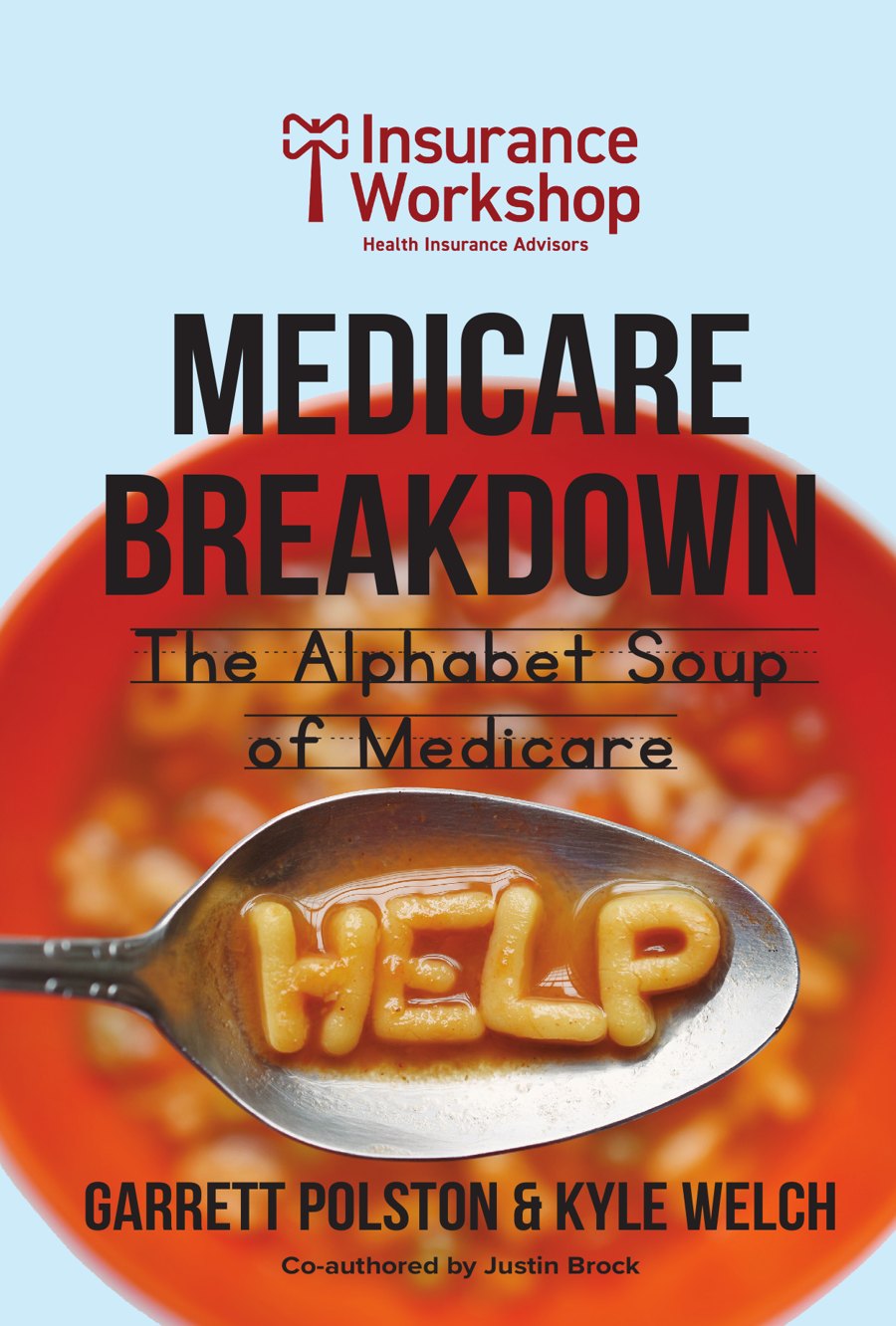
Medicare Breakdown
Let’s simplify the heck out of Medicare.
Medicare in its current state was created by a combination of two types of people: economists who would never use it, and actuarial mathematicians who would never have to pay for it. This dynamic duo handed us a well-intentioned but complex system.
By the end of this, you’ll find that Medicare isn’t that bad for the Medicare beneficiary — if they choose the right system from the get-go. It’s that choosing that’s so hard, with all of the misinformation and confusing terminology. Without further delay, let’s jump right into the Alphabet Soup of Medicare.
The Parts of Medicare
Everyone goes over these — but I’ll tell you what you actually need to know. Medicare has four parts, and together they spell out the “alphabet soup.”
Hospital
Mostly hospital room and board — inpatient care.
Medical
Doctor visits, surgery, labs and durable medical equipment — almost all medical treatment except hospital room & board and prescriptions.
Medicare Advantage
Privatized Medicare. If you choose this route you no longer use Parts A & B directly while on Part C — usually for a full calendar year at a time.
Prescription Drugs
A standalone plan you purchase with Parts A & B (or sometimes with certain Part C plans). This plan covers your drugs.
Choosing Part C isn’t necessarily bad — it just depends on someone’s particular circumstances. There are multiple right ways to set up Medicare.
Medicare Part A
What does Part A cover?
Inpatient hospital care. All care you receive after being admitted into a hospital by a physician. Medicare covers up to 90 days each benefit period in a general hospital, plus 60 lifetime reserve days, and up to 190 lifetime days in a Medicare-certified psychiatric hospital.
Skilled nursing facility care. Medicare covers your room, board, and certain services — including medications, tube feedings, and wound care — up to 100 days each benefit period. To qualify, you must have spent at least three consecutive days in the hospital within 30 days of admission to the skilled nursing facility, and must need skilled nursing or therapy services.
Home health care. Though normally covered by Part B, Part A kicks in if you’ve spent at least three consecutive days as a hospital inpatient within 14 days of receiving home care. Up to 100 days of daily care, or an unlimited amount of intermittent care, are covered.
Hospice care. Covered for as long as your provider certifies it is necessary.
How much does it cost?
Most of the time, Part A has no premium — certain taxes you paid during your working years were specifically for future Medicare coverage. As long as you worked at least 10 years in your lifetime in the United States, most of the time you won’t pay a dime. If you haven’t, you can still purchase Part A if you’ve been a legal resident or had a green card for at least five years.
- Hospital admission deductible$1,736
- Daily hospital copay, days 61–90$434 / day
- Daily hospital copay, days 91–150$868 / day
- Skilled nursing copay, days 21–100$217 / day
Medicare Part B
Part B is much simpler. It covers all of the medical stuff, filling the gap in services between hospital room & board and prescriptions.
Part B has a calendar-year deductible that in 2026 is $283, one time for the calendar year. That’s the amount you pay 100% of before Part B starts picking up anything. After the deductible is met, Part B turns into 80/20 coverage — Part B covers 80% of services and you’re responsible for 20% of the Medicare-allowable charge.
The biggest problem here is that the 20% has NO CAP. On a group plan or an ACA plan you’d have a maximum out-of-pocket (MOOP) that creates a stop-loss. With Parts A and B of Medicare alone, there is no structured stop-loss.
Medicare Part C
We’ll break down Part C — Medicare Advantage — a little later on, once the pieces are in place. Jump to Medicare Advantage →
Medicare Part D
Part D is your prescription drug coverage, and, as any Medicare veteran will tell you, it’s one of the most complex and sometimes most cost-prohibitive pieces of the puzzle. There are multiple phases of coverage, each with its own rules and costs. Let’s walk through the 2026 landscape in a way that’s easier to navigate.
The Deductible Phase
For 2026, the Part D deductible is capped at $615 — but don’t stress over that number just yet. Plenty of plans offer a $0 deductible option, especially for those lower-tier, everyday medications that make up the bread and butter of most people’s prescriptions. Typically, if you’re looking at Tier 1 or Tier 2 drugs (generic or preferred), the deductible doesn’t even come into play. If your doctor prescribed something more specialized, you might start to see the deductible’s impact.
Initial Coverage Phase
This is where most of us spend the majority of the year — around 81% of folks never leave this phase. Things are straightforward: you pay 25% of the cost of your generic and brand-name medications. You stay in this stage until your total out-of-pocket spending for covered Part D drugs reaches $2,100 in 2026 (this includes certain payments made on your behalf, like Extra Help, as Medicare outlines).
You may still hear people talk about the old “donut hole,” but as of 2026 and beyond, there is no longer a separate coverage gap. The 25% coinsurance stays steady all the way until you hit the annual out-of-pocket limit. Your plan tracks everything automatically.
Catastrophic Coverage Phase
This is where it really gets good. Starting in 2026, there’s a hard out-of-pocket cap at $2,100. Once you hit that number, you’re done paying out-of-pocket for the rest of the year — real peace of mind if you’re managing something serious like cancer, diabetes, or another condition that demands high-cost medications.
- Deductible (maximum)up to $615
- Initial coverage coinsurance25%
- Annual out-of-pocket cap$2,100
- Insulin, per covered prescription$35 / month
- Recommended vaccines$0
A quick note about your EOB
Each month after your prescriptions are processed, your plan sends an Explanation of Benefits (EOB). It shows what prescriptions you filled, what you paid, what your plan paid, your current coverage stage, and how much counts toward your totals. Think of it as your “Part D receipt” — the easiest way to keep an eye on where you are in the benefit for the year.
Other enhancements you should know about
The Medicare Prescription Payment Plan. CMS now requires Part D plans to let enrollees pay their out-of-pocket costs through capped monthly payments rather than all at once at the pharmacy. This spreads the burden across the year, so you’re not staring down a massive pharmacy bill in January.
Insulin and vaccine coverage. Insulin costs are now capped at $35 per month per covered prescription, making diabetes management far more affordable. Plus, recommended vaccines are now covered with no cost-sharing, so there’s no barrier to staying protected.
Have a Medicare Question?
Medicare doesn’t have to be something you figure out alone. Garrett, Kyle and the team at The Insurance Workshop help people throughout Kentuckiana understand their options.
Get Medicare HelpPlan F
Plan F — fills every hole
The Medicare Supplement Plan F is the simplest to explain: it fills ALL holes in Medicare Parts A and B.
That includes the Part A deductible, daily hospital copays, skilled nursing facility copays, and it grants 365 lifetime reserve hospitalization days. It also covers the Part B deductible, the 20% coinsurance, excess charges, and even provides a Foreign Travel Emergency benefit.
Plan F is not available to anyone who became eligible for Medicare after January 1st, 2020. If you became eligible (not necessarily enrolled) before that date, you can still enroll in Plan F using normal Open Enrollment, Guaranteed Issue, or underwritten rules, as long as companies offer it.
Plan G
Plan G — identical to Plan F, with one exception
Plan G is identical to Plan F except it does not cover the Part B deductible (the one-time $283 in 2026).
That deductible goes up over time, but typically increases slowly and only once per year. If you became eligible for Medicare after January 1st, 2020, Plan G is most likely the best Medicare Supplement plan available to you — and it becomes your Guaranteed Issue “go-to” plan as well.
Plan N
Plan N — lower premium, a few small copays
Plan N is used primarily for cost savings, and it’s statistically the most stable on price across the board.
Plan N covers 100% of the hospitalization costs associated with Medicare Part A and covers the 20% coinsurance completely. Like Plan G, it does not cover the Part B deductible. The other holes are a copay of up to $20 for primary care and specialist appointments (that’s a cap per visit), and a $50 emergency room copay if you aren’t admitted to the hospital. Lastly, Plan N does not cover excess charges.
Excess charges usually aren’t a huge deal. Some states don’t even allow them, and in states where they’re charged, Aetna presented a statistic that only about 4% of doctors and hospitals in the country practice charging them.
Plan F vs. Plan G vs. Plan N
| Coverage | Plan F | Plan G | Plan N |
|---|---|---|---|
| Part A hospital costs | ✓ | ✓ | ✓ |
| Part B 20% coinsurance | ✓ | ✓ | ✓ |
| Part B deductible ($283) | ✓ | ✕ | ✕ |
| Part B excess charges | ✓ | ✓ | ✕ |
| Office / ER copays | None | None | Up to $20 / $50 |
| Foreign travel emergency | ✓ | ✓ | — |
| Monthly premium | Highest | Middle | Lowest |
Medicare Advantage
A lower-cost route — with a built-in stop-loss.
Part C of Medicare is also referred to as Medicare Advantage, and the plans you elect to fill this role are called Medicare Advantage Plans, MAPDs, or MA-Only Plans. These can get complicated because there are many types — so we’ll break down the three most common and their pros and cons.
Remember that the primary benefit of a Medicare Advantage plan is a lower-cost option that puts a Maximum Out-of-Pocket on your Medicare coverage. That means you have a stop-loss to “stop the bleeding” if you enter a catastrophic medical scenario.
PPO Plans
Perhaps the most common type of plan. With a PPO you get reduced cost-sharing when you use a preferred provider or member of the PPO network — but you are not required to use a PPO provider to receive medical services.
PPO plans typically include extra benefits like dental, vision, and hearing, and normally include drug coverage.
HMO Plans
Probably the second most common Advantage plan type. With an HMO you have an assigned primary care provider who must refer you to doctors, hospitals, labs, and specialists within the network to receive benefits.
So why choose an HMO when a PPO is available? If you normally use a fairly tight group of doctors and hospitals anyway, they’re in the HMO network, and you don’t travel a ton — you can typically get much lower copays, deductibles, and coinsurance, plus the ever-coveted extra benefits like dental, vision, hearing, rides to doctors, chiropractic visits, and over-the-counter benefits.
PPO plans often offer some of these benefits too, but HMOs expand them using money that would otherwise pay for larger networks. HMOs also normally include drug coverage.
MSA Plans
Often extremely valuable for a certain type of person: normally very healthy, financially stable (not necessarily rich), and with a positive outlook on the future.
MSA plans are high-deductible health plans with an annual deposit that can build up an account value which eventually eclipses the deductible and provides 100% coverage. They’re normally $0 premium, accepted at all providers that accept Traditional Medicare, and the growing account value can be used for any IRS-qualified healthcare expense — including dental, vision, and hearing.
The cons: if health problems arise too quickly you can spend more than is in the account, and the deductible could leave a substantial out-of-pocket amount. You also still have to buy a standalone Part D plan — though your MSA account value can be used toward drug copays.
Hospital Indemnity Plans
Sometimes we recommend a Hospital Indemnity Plan (HIP) with riders designed to fill the holes in Medicare Advantage plans. These plans are often extremely valuable.
One thing we commonly recommend is an MSA plan paired with a Hospital Indemnity Plan and a lump-sum cancer rider — kept in place until the MSA account value reaches a level that no longer requires the HIP. Then you can shed it. It’s like a vanishing premium.
Dental, Vision & Hearing
When someone chooses a Medigap plan, they normally don’t have non-medical dental, vision, and hearing coverage. When they ask about these benefits, we recommend a couple of different plans depending on their needs — mostly Nationwide and Manhattan Life fulfill these needs best.
Most of the time these plans have one-year waiting periods on major services, so we consider them long-term solutions — not a quick fix, but a long-term fix to your dental, vision, and hearing needs. And with Medicare Advantage you often have some of these included, but a standalone plan can still give you a boost in coverage.
Additional Cancer Coverage
We always recommend a lump-sum cancer plan for our clients. Here are the two situations where it’s needed.
One: With Medicare Advantage plans, you typically pay 20% of your outpatient chemotherapy or radiation until you’ve met your maximum out-of-pocket (normally around $4,000–$10,000). A $10,000 lump-sum cancer benefit can cover that for a calendar year.
Two: Medicare’s drug coverage can leave major holes for high-priced cancer medications, which are increasingly used instead of outpatient radiation. These medications can cost someone $10,000–$15,000 a year.
At a minimum, we recommend a $10,000 lump-sum cancer policy for our clients — but a larger one, up to say $50,000, would not be a bad idea at all.
Enrollment Periods
The windows that decide when — and how — you can change coverage.
Open Enrollment
Here’s a term that often gets used for periods it doesn’t apply to. With Medicare, “Open Enrollment” has two distinct meanings.
The Medigap Open Enrollment Period. This is the window that runs 6 months around your 65th birthday and/or your Part B effective date. It gives you the right to purchase a Medigap policy with no health questions.
Open Enrollment Period (OEP)
Also, January 1st to March 31st is the OEP — and this one is different. It’s for people to make one of the following elections:
Medicare Advantage back to Traditional Medicare, or Medicare Advantage to another “like” Medicare Advantage plan. In other words, this period is for untangling bad decisions made during AEP (the Annual Election Period).
Annual Election Period (AEP)
This is the big period that gets advertised on TV everywhere. AEP runs October 15th to December 7th, and October 1st–14th is called Pre-AEP. During Pre-AEP, new-year plan information can be presented but not sold; during AEP it can be sold or enrolled in for the following calendar year. All elections during this period take a January 1st effective date.
Things this election period can do:
- PDP (Part D) plan swaps
- Medicare to Medicare Advantage
- Medicare Advantage disenrollment
- Medicare Advantage to another Medicare Advantage plan
- Medicare Supplements can be shopped, but no special rules apply — they must still be underwritten
Underwriting
Medigap plans require underwriting (answering health questions) to change from one plan to another for a better price or a different plan — when someone is outside of their Medicare Supplement Open Enrollment Period (6 months from the 65th birthday or Part B effective date). Hospital indemnity and cancer insurance can use underwriting criteria as well.
Underwriting criteria vary widely from company to company. For example, Mutual of Omaha only looks back 2 years on cancer treatment while Aetna goes back 3 — yet Aetna will consider someone with mild COPD, while Mutual of Omaha may instantly decline. There is one exception to underwriting: guaranteed issue periods.
Guaranteed Issue (GI)
Guaranteed Issue periods, as they pertain to Medicare, are mostly related to Medicare Supplements. Here are some examples:
1. Someone who isn’t in Open Enrollment (over 65 and outside 6 months from their Part B effective date) who has maintained other creditable coverage and is losing that coverage — voluntarily or involuntarily depending on the state, most commonly through retirement. They’d have a 63-day Guaranteed Issue period starting the day they lost coverage to get a Medigap plan without answering health questions. As discussed, they can only get certain plans — Plan F for those initially eligible before January 1st, 2020, and Plan G for those eligible after.
2. Someone on a Medicare Advantage plan who moved out of the plan’s area of availability would typically be given a guaranteed issue period, which could also be used to purchase a Medigap plan.
3. Certain states have an Anniversary Rule or Birthday Rule that lets you change every year without answering health questions.
Special Enrollment Period (SEP)
Similar to Guaranteed Issue rules, there are certain times you can use a SEP to enroll in drug plans or Medicare Advantage plans due to some of the same reasons discussed in the Guaranteed Issue chapter.
Initial Enrollment Period (IEP)
I tend to do things backward — if you’ve made it to the IEP chapter you’re reaching the end, but most people start with this one.
The IEP is the period when you’re turning 65 or first becoming Medicare-eligible. It starts 3 months before the first month of eligibility, includes the first month of eligibility, and ends 3 months after — a 7-month period. During this time you can pretty much do anything: it normally overlaps your Medigap Open Enrollment Period, so you can get Medigap plans, Medicare Advantage plans, Part D plans, and more.
This is a good time to get set up the right way so you don’t have to use as many of the other periods we discussed.
H₂O — set up the right way
When a child looks at the chemical compound of water, they think it’s a typo. When an adult looks at it, they instantly think “water.” When I look at (A+B)+G+D, I think of a Medicare beneficiary set up right. I can also see (A+B)+N+D and think the same — or (A+B)<C+HIP given the right circumstances. Whereas there’s only one way to make water, there are multiple ways to satisfy someone’s Medicare needs. It all depends on their circumstances.
Not Sure Which Setup Fits You?
(A+B)+G+D… (A+B)+N+D… Advantage + a hospital indemnity plan? The right answer depends entirely on your circumstances — and that’s exactly what we help sort out.
Schedule a ConversationHow to Avoid 7 Costly Mistakes With Medicare
A co-authored informational piece — treat it like a mini-book.
Missing Enrollment Deadlines
Failing to timely enroll in your Medicare plan is a costly error that can result in life-long penalties and/or denial of your application. Enrolling in Medicare Part B too early can also cost you thousands in premiums for coverage you can’t use — so here’s what you need to know.
Initial enrollment at 65
If you are drawing Social Security benefits at least 4 months before you turn 65, enrollment in Part A and Part B should happen automatically, and you should receive your card before your birthday month. If you’re not receiving Social Security when you turn 65 and aren’t covered under a large group health plan, you must take action to enroll — at your local Social Security office or online at ssa.gov/benefits/medicare. There’s a seven-month Initial Enrollment Period: it begins three months before your birthday month and ends three months after.
Enrollment consists of three insurance plans (or Medicare Advantage): Part A (inpatient hospital, skilled nursing, hospice, some home health), Part B (outpatient care, medical supplies, doctors and surgeons, preventive care), and Part C (Parts A, B, and sometimes D in one plan — Medicare Advantage, not the same as Medigap).
Failure to sign up within the enrollment period can result in a penalty — 10% per year for Part B and 12% per year for Part D — added to your premium for each year you were eligible but not enrolled.
Fred turns 65 in July, is no longer working, and hasn’t drawn Social Security yet. He has a seven-month window (April 1st–October 31st) and contacts an advisor in May so coverage begins the first day of his birthday month. A qualified Medicare specialist helps Fred sign up for Medicare, enroll in a Part D drug plan and a Medigap policy, and Fred also elects a cancer policy and a dental/vision/hearing plan.
Missing the Medigap Open Enrollment Period
Medicare supplements (Medigap) are designed to pay some of the deductibles, copays, and 20% coinsurance that Parts A & B don’t cover. There are 11 distinct plans, plus select plans, but the most popular today are F, G & N.
Many companies sell these plans, but there can be no difference in benefits from company to company — thanks to a 1992 rule from the National Association of Insurance Commissioners that standardized Medigap policies. Although the benefits of Plan G, for example, must be identical across all companies, there can be — and often are — vast differences in monthly premiums and service.
To qualify, there’s a one-time, six-month Open Enrollment that occurs when you enroll in Part B or turn 65. This is the only time you can enroll in a Medigap policy without answering health questions, unless you qualify for a Special Enrollment Period. Once it expires, you can be turned down for coverage, or may have to buy a more expensive policy.
Fred turns 65 July 5th and enrolls in Parts A & B with a July 1st effective date, but forgets to enroll in a Medigap policy. He applies the following January and has to answer “yes” to a heart/circulatory surgery question — so he’s turned down for most plans. One plan will take him, but the premium is 100% higher than it would have been during Open Enrollment. Fred made a big mistake by missing the deadline.
Enrolling in Medicare Part B Too Early
Medicare Part B is primary medical coverage. If you’re working past 65 and your group insurance plan has over 20 employees, you may not need Part B, because your group policy would be primary. Enroll in Part B unnecessarily and you’re paying a monthly premium for insurance you can’t use — and worse, you’ve used up your six-month Medigap Open Enrollment Period unnecessarily.
Fred was ill-advised to enroll in Parts A and B at 65 while still working with primary group coverage. Three years later he retired due to illness. He’s eligible for a 63-day guaranteed issue period to enroll in Medigap without health questions — but not the 6-month Open Enrollment, because that began when he enrolled in Part B. Not only did he waste his Open Enrollment, he also wasted over $4,000 on Part B premiums for coverage he couldn’t use. (Applying within 63 days of losing coverage guarantees a Medigap Plan F; those eligible after January 1, 2020 would be guaranteed Plan G.)
Failing to Apply for the Low Income Subsidy
Medicare provides a program for people with limited income and resources to help cover prescription drug costs. “Extra Help” bridges this gap for those who qualify and can greatly reduce the financial burden. Some people qualify automatically; others must apply. Eligibility is based on your income and your state’s requirements.
For example, in 2025 in the state of Mississippi, a single person’s monthly income had to be less than $1,956.25 to receive the subsidy; for a married couple, less than $2,643.75.
This often-overlooked benefit can reduce your Part D premiums, waive your Part D deductibles, and lower your Part D copays.
Mistaking Medicare Advantage for Medigap
One of the most common mistakes people make is confusing Medicare Advantage plans with Medigap policies. It’s important to understand the distinction because the benefits are vastly different. Typically an Advantage plan is cheaper than a Medigap policy, but your out-of-pocket responsibility is greater. In some areas and for some people, Medicare Advantage plans work great — but they aren’t appropriate for everyone.
Don’t buy a plan for the premium — buy it for the overall value, which includes benefits, premiums, and provider network.
Most of our clients who live in rural areas prefer a Medigap policy if they’re medically qualified — these plans are more widely accepted by doctors and leave very little for the insured to pay. In urban areas with competing healthcare systems, Medicare Advantage can be more attractive. And if someone cannot afford or does not qualify for Medigap, an Advantage plan may be the best option, because copays can be more affordable than Original Medicare alone and Advantage plans provide an annual out-of-pocket limit (which can be quite high — up to $10,000 per year unless you qualify for Medicaid).
HMOs pay fees to particular providers; members pay copays and some coinsurance until reaching the annual out-of-pocket limit, and must see plan doctors (except emergencies) after a referral from an assigned primary care doctor. PPOs have a network of providers who discount services, but still provide benefits outside the network — usually at additional cost and higher out-of-pocket limits. Premiums for both can be very low, sometimes $0. If you opt for Medicare Advantage, be comfortable with the potential out-of-pocket costs and network restrictions.
Failure to Insure What’s Not Covered by Medicare
Do not assume Medicare covers everything. Several commonly overlooked areas warrant important consideration:
Cancer treatment. Medicare’s own website warns that doctors may recommend services not covered by Medicare, for which you’d be solely responsible. Some cancer drugs are extremely expensive and may not be fully covered. Consider a lump-sum cancer insurance policy in addition to Medicare.
Long-term care. Medicare covers some short-term skilled nursing limited to recovery services — not long-term custodial care such as nursing homes or assisted living. Consider Long-Term Care Insurance in addition to Medicare.
Deductibles, copays, and coinsurance. Medicare alone still requires you to pay these.
- Part A deductible (per 60-day benefit period)$1,736
- Hospital daily copay, day 61 → up to day 91$434 → $868
- Skilled nursing copay, days 21–100$217 / day
- Part B deductible (calendar year)$283
- Part B coinsurance20%, no cap
Medigap pays most of these Medicare-approved costs: Plan F pays them all, while Plan G pays all but the $283 Part B deductible. Medigap Select plans are like standard plans except you must use a network hospital to avoid the inpatient deductible — the premiums are a little lower, but usually not worth the restriction, especially in rural areas. Medicare Advantage plans have different structures with an annual out-of-pocket limit of up to $9,250 (most are lower). No insurance is designed to pay the copays on Advantage plans, and Medigap can’t be used with Advantage — but other supplemental policies (cancer, heart attack, stroke, hospital indemnity) can help offset out-of-pocket costs if you qualify.
Not Annually Reviewing Your Medicare Drug Plan
Not reviewing your Part D coverage yearly is a big — and very frequent — mistake. Many people assume that because their coverage has been good, there’s no need to review it. Some keep their existing plan through the Annual Election Period only to find in January that premiums and copays increased. Plans can also revise covered drugs, change copays, and add new restrictions like step therapy or quantity limits. Changes would then have to wait until the next Annual Election Period.
Our Medicare advisors use special tools to help you review, compare benefits, and choose your plan each year. We handle the enrollment for you and assist if there’s an issue. Don’t wait until the last minute — our clients are reminded to review annually via our websites and mail.
Whether you’re already on a Medicare plan and unsure it’s the best fit, or you’re turning 65, retiring, or becoming eligible for disability Medicare — the best move is to reach out and get a fresh set of eyes on it.
Conclusion
I train thousands of agents how to do this, but I’m consistently helping people make their individual choices as well. We need more qualified and helpful Medicare-focused insurance agents — not cold-calling plan-flippers who aren’t there to help, but true problem solvers who can take your circumstances and come up with a simple, appropriate solution.